
A Town That Still Hammers. Tsubame-Sanjo in February.
The train from Tokyo takes under two hours. The last part of the ride is rice fields under snow, then the station, then the sign: Tsubame-Sanjo. Two cities, one name, one trade. Almost everything titanium we carry starts here.
Four hundred years of metal
It began with nails. In the 1600s farmers along the Shinano River made Japanese nails in the off-season for a capital that kept burning down and rebuilding. Nails became blades and tools in Sanjo, hammered copperware in Tsubame, and, in the early 1900s, western flatware. For a good part of the last century a large share of the world's stainless spoons and forks came out of these two towns. When camp cookware went to titanium, the presses, the spinning lathes, and the finishing hands were already here.
A workshop in winter
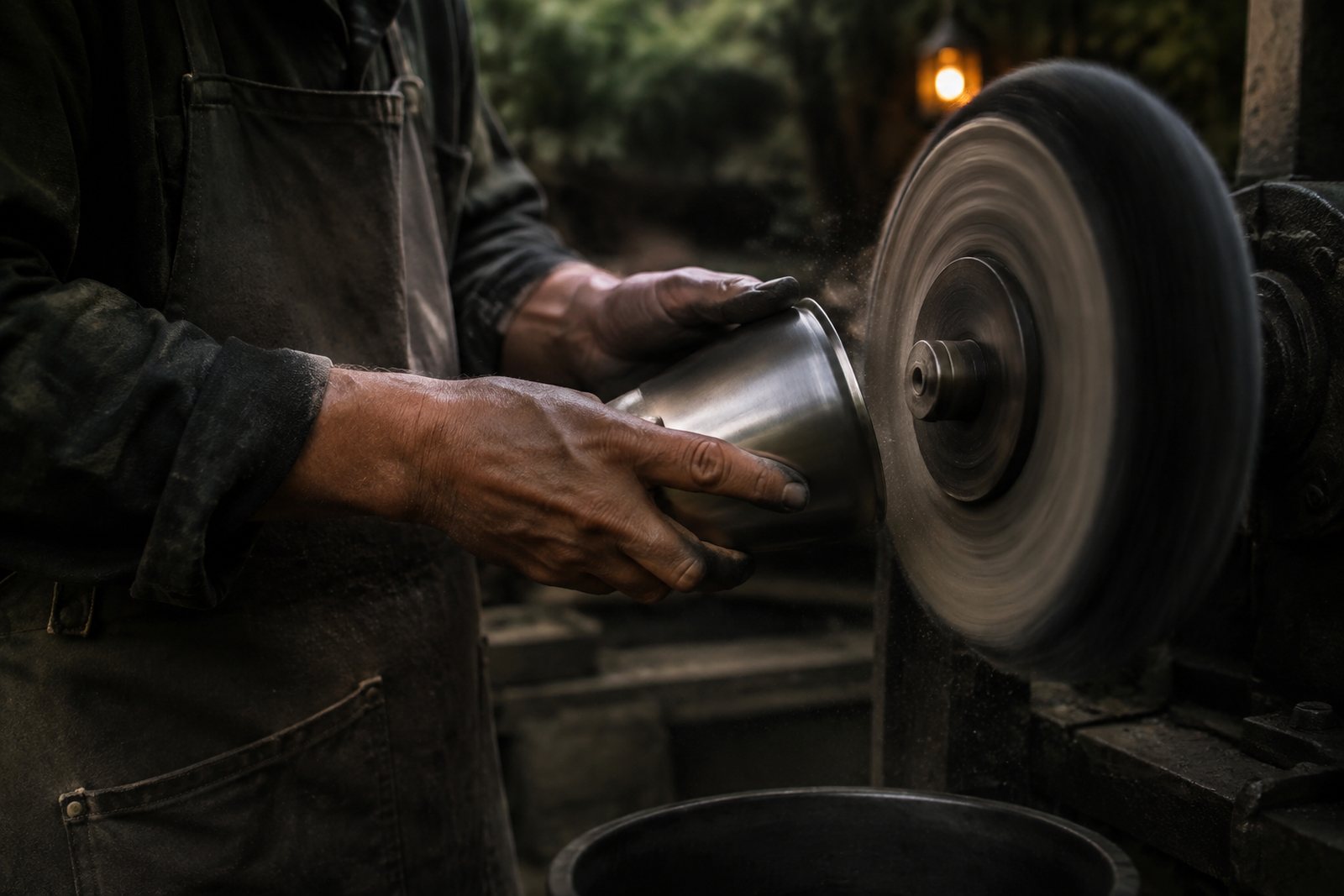
We visited in February, when the fields are white and the workshops are loud. In a shop making cups, a press punches a titanium blank. A lathe spins it into a bowl against a form. Then it is hands: a file at the rim, a buffing wheel, an inspection under a lamp, a thumb run around the edge that will meet a lip. Nobody hurried. The radio was on. A heater glowed in the corner and did very little.
The open-factory festival
Every autumn the town opens its doors. The Tsubame-Sanjo factory festival, held each October since 2013, lets visitors walk into dozens of working factories and watch. Knife makers, copper hammerers, spoon polishers, cup spinners. It is the best day of the year to understand why a titanium cup from here costs what it costs, and why it lasts.
What we took home
Not a story to sell the cup. A reason we chose it. The pieces we carry from this town are not rare and they are not decorated. They are made by a few people, slowly, in a place that has done this for longer than the country has had a constitution. That patience is the same one you feel when the fire burns low.
Related: Titanium Craft · TABI Titanium Fire Stand · Titanium Sierra Cup 480 · Our Standard